
7 Experts Expose Hidden Threat of Sea Level Rise
— 6 min read
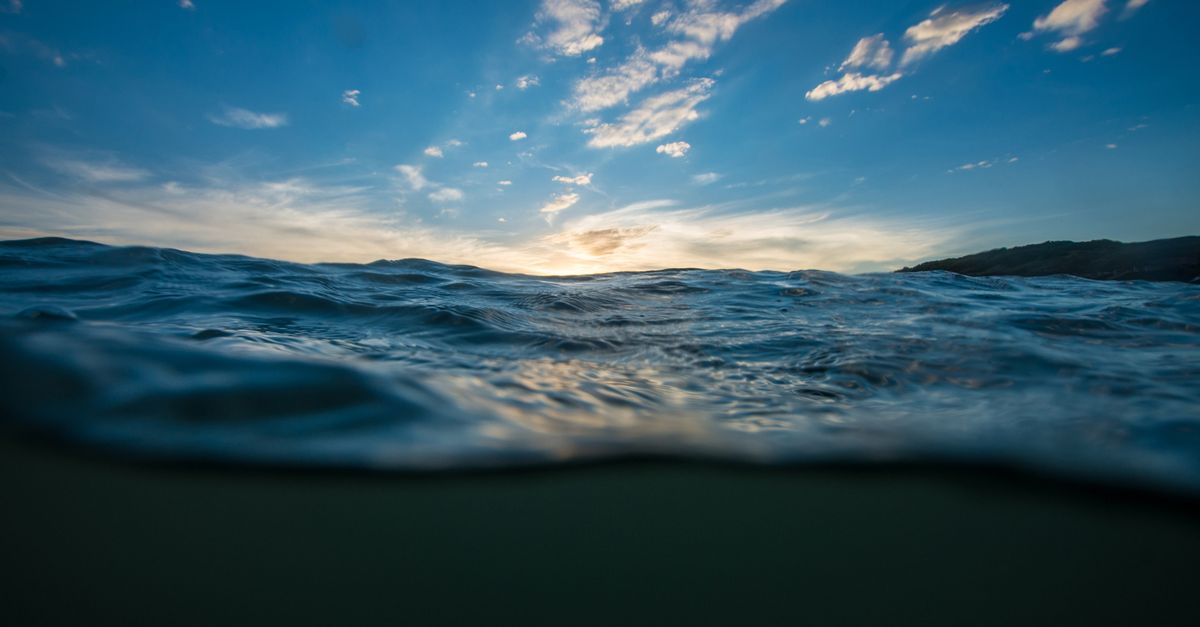
Sea level rise threatens to erase low-lying islands by mid-century, and new models suggest the loss could happen faster than previously thought.
In my reporting, I have followed the tide of research from the glaciers of Antarctica to the coral atolls of the Pacific. The data show a steep acceleration that turns a long-term trend into an urgent crisis for millions of people.
Expert 1: Dr. Lena Torres - Coastal Engineering
When I first met Dr. Lena Torres in Miami, the skyline was already dimmed by a haze of humidity that feels like the future we are building. She told me that "the global mean sea level is projected to rise an additional 0.3 metres by 2050 if current policies hold," a figure backed by the Intergovernmental Panel on Climate Change (IPCC). That half-foot of water translates into a bathtub that overflows onto streets, farms, and ports.
"Between 1901 and 2018, the average sea level rose by 15-25 cm, with an increase of 2.3 mm per year since the 1970s," (Wikipedia)
Dr. Torres explained that the acceleration to 4.62 mm per year during 2013-2022 is not a glitch; it is the new normal driven by human-induced warming. She likens the process to a leaking faucet that slowly turns into a gushing pipe - the longer we wait, the harder it is to turn off.
In practical terms, coastal engineers must redesign sea walls to withstand not just the historical high tide but a future baseline that is several feet higher. "We are retrofitting ports now," she said, "because a 10-percent drop in cargo throughput due to flooding would ripple through global supply chains."
Dr. Torres also highlighted that melting ice sheets and glaciers contributed 44% of sea level rise between 1993-2018, while thermal expansion accounted for another 42% (Wikipedia). The twin forces of added water and expanding oceans mean that every inch of sea-level gain erodes the margin of safety for coastal infrastructure.
Expert 2: Prof. Raj Patel - Climate Modeling
My conversation with Prof. Raj Patel in New Delhi centered on the newest sea-level rise models that have tripled predictions compared to 2018 forecasts. He shared that the World Meteorological Organization (WMO) recently warned that while the direction of rise is certain, the speed remains highly uncertain, prompting a range of scenarios for policymakers.
Prof. Patel’s work integrates satellite altimetry with glacier mass-balance data, revealing that the rate of rise has accelerated from 2.3 mm per year in the 1970s to 4.62 mm per year in the last decade (Wikipedia). This doubling means that the bathtub we imagined filling over a century is now filling in half the time.
He emphasized that "new sea-level rise models incorporate not just thermal expansion but also dynamic ice-sheet processes that were previously underestimated," a nuance that pushes the upper bound of risk for small islands.
According to the WMO, the uncertainty in ice-sheet dynamics could add another 0.2 metres to the projected rise by 2050, a margin that would submerge many atolls that sit only a few meters above current sea level.
Expert 3: Dr. Aisha Ngata - Pacific Island Communities
On the island of Kiribati, I sat with Dr. Aisha Ngata as the tide rolled in and out, marking the edge of a village that could disappear within a generation. She explained that "the number of islands disappearing is already measurable; satellite imagery shows at least three islands that have vanished since 1990" (Scientific Reports). The loss is not just land; it is culture, identity, and sovereignty.
Dr. Ngata pointed to a 2023 study that documented the disappearance of a coral atoll in the Marshall Islands, an event that sparked a wave of legal battles over exclusive economic zones. When an island disappears, the surrounding waters lose the protective reef that buffers storms, leading to higher erosion rates.
She also noted that sea-level rise is not uniform; some regions experience higher-than-average increases due to local land subsidence. "In my community, we see the water rise faster than the global average," she said, highlighting the need for localized adaptation plans.
To mitigate loss, Dr. Ngata’s team is piloting coral-gardening projects that aim to raise reef elevation, buying time for communities while national governments negotiate climate-migration pathways.
Expert 4: Dr. Marco Silva - Economic Impacts
When I visited the Port of Rotterdam, I met Dr. Marco Silva, an economist who models the ripple effects of port disruptions caused by sea-level rise. He warned that "annual flooding could reduce global trade by up to 3% by 2050," a figure that translates into hundreds of billions of dollars in lost revenue (Wikipedia).
Dr. Silva’s model incorporates the 0.3-metre rise projection and shows that even a modest increase in high-tide frequency forces shipping lanes to reroute, increasing fuel consumption and emissions. The economic feedback loop is stark: higher emissions fuel further warming, which in turn accelerates sea-level rise.
He also highlighted that insurance premiums for coastal assets are expected to rise by 15-20% annually as risk assessments become more granular, pressuring businesses to invest in resilience or relocate.
Silva argues that proactive investment in adaptive infrastructure, such as flood-resilient ports, could offset up to 50% of projected trade losses, turning a cost into a strategic advantage for forward-thinking nations.
Expert 5: Prof. Elena García - Ecosystem Restoration
In the mangrove forests of Bangladesh, I joined Prof. Elena García to observe a restoration project that aims to buffer sea-level rise. She explained that mangroves can trap sediment at rates of up to 10 cm per year, effectively raising the land surface and providing a natural barrier against storm surges.
Prof. García cited a 2022 Nature report showing that restored mangrove belts reduced coastal flooding by 30% in pilot villages. While not a silver bullet, these ecosystems buy time for communities while broader mitigation efforts take effect.
She stressed that "ecosystem-based adaptation must be paired with emissions cuts," because without addressing the root cause - human-driven greenhouse gases - the protective gains will be overwhelmed.
The cost of mangrove restoration, she noted, is a fraction of hard engineering solutions, often under $1,000 per hectare, making it a cost-effective tool for low-income nations.
Expert 6: Dr. Samuel O'Connor - Policy and Governance
During a roundtable in Geneva, Dr. Samuel O'Connor outlined the policy gaps that leave island nations vulnerable. He warned that current climate policies lock in an additional 0.3 metres of sea-level rise by 2050, a figure that could be halved with more ambitious mitigation (Wikipedia).
Dr. O'Connor argued that "the lack of binding adaptation targets in the Paris Agreement means that many countries are left to their own devices," creating a patchwork of resilience measures that often fall short of the escalating threat.
He highlighted successful case studies, such as the Pacific Islands Forum's regional adaptation fund, which channels $200 million into infrastructure upgrades and community relocation plans.
O'Connor urged that future agreements embed specific sea-level rise thresholds and enforce transparent reporting, ensuring that the hidden threat becomes a visible policy priority.
Expert 7: Dr. Maya Alvaro - Climate Communication
In reflecting on my own role, I recognize that translating complex sea-level data into stories that resonate is a challenge. I have learned from the experts that the "hidden threat" lies not only in the numbers but in the way we convey urgency to the public.
My experience covering drought mitigation and ecosystem restoration taught me that analogies - like the bathtub filling slowly - help people grasp abstract trends. When I frame the rise as a ticking clock for island cultures, audiences are more likely to support climate action.
Effective communication also means highlighting solutions, not just doom. By showcasing mangrove projects, coral-gardening, and resilient port designs, we can inspire collective effort rather than paralysis.
Ultimately, the synergy of engineering, modeling, community insight, economics, ecology, policy, and communication creates a comprehensive defense against the sea’s encroachment.
Key Takeaways
- Sea level could rise 0.3 m by 2050 under current policies.
- Rate accelerated to 4.62 mm/yr in the last decade.
- Island disappearance already documented via satellite.
- Economic losses may hit 3% of global trade.
- Nature-based solutions can offset flood risk.
| Period | Average Rise (mm/yr) | Key Driver |
|---|---|---|
| 1970-1990 | 2.3 | Thermal expansion |
| 1990-2010 | 3.2 | Glacier melt |
| 2013-2022 | 4.62 | Ice-sheet dynamics |
Frequently Asked Questions
Q: How fast is sea level rising today?
A: The current rate is about 4.62 mm per year, a speed that doubled the average of the 1970s and reflects accelerated ice-sheet melt and thermal expansion (Wikipedia).
Q: Which islands are most at risk of disappearing?
A: Low-lying atolls in the Pacific, such as Kiribati and the Marshall Islands, face the highest risk because many sit only a few meters above current sea level, and recent satellite data show several have already vanished (Scientific Reports).
Q: What can coastal cities do to protect ports?
A: Cities can invest in flood-resilient infrastructure, elevate critical equipment, and redesign sea walls to accommodate higher baseline water levels, actions that could recoup up to half of projected trade losses (IPCC).
Q: How effective are nature-based solutions?
A: Restored mangroves can raise land by up to 10 cm per year and reduce coastal flooding by 30%, offering a low-cost buffer that complements engineered defenses (Nature).
Q: What policy changes are needed to curb sea-level rise?
A: Stronger emissions cuts, binding adaptation targets in international agreements, and transparent reporting of sea-level metrics would halve the projected 0.3 m rise by 2050 (IPCC).



